


Professor Gregory A. Kopp
The Design Tornado concept – a novel approach for determining tornado wind loads
As losses continue to rise globally from severe convective storms, design considerations are beginning to be included in building codes and standards. For example, in 2022, two design standards introduced tornado loads for the first time: the US standard, ASCE 7 included requirements for tornado loading together with maps of wind speeds; in Canada, CSA S520 developed prescriptive requirements for wood-frame structures for up to EF2-rated tornadoes. Nevertheless, many questions remain regarding building aerodynamics in tornadoes and the approaches to determining design loads including wind tunnel procedures. The paper introduces the concept of the “design tornado” which includes, not only probabilistic design wind speeds, but values for the static pressure drop in the core, the static pressure variation at ground level, the core diameter size, and the translation speed of the tornado vortex. Including such parameters in a design standard enables the loading equations to account for key aspects of loads – including both aerodynamic and static aspects, which differ from atmospheric boundary layer loads –potentially simplifying the requirements for wind tunnel procedures.
ImpactWX Chair in Severe Storms Engineering
Director, Canadian Severe Storms Laboratory
Professor, Department of Civil and Environmental Engineering Western University, London, Ontario, Canada
Dr. Gregory A. Kopp is a leading expert in wind engineering, specializing in the impact of extreme wind events such as tornadoes and hurricanes on buildings and infrastructure. He earned his B.Sc. in Mechanical Engineering from the University of Manitoba in 1989, an M.Eng. from McMaster University in 1991, and a Ph.D. in Mechanical Engineering from the University of Toronto in 1995. After completing a postdoctoral fellowship in Spain, he joined Western University in 1997.
Dr. Kopp is the founding director of the Canadian Severe Storms Laboratory (CSSL) and the lead researcher for the Northern Tornadoes Project (NTP) and Northern Hail Project (NHP). His research integrates wind tunnel testing, field surveys, and structural analysis to develop practical solutions for enhancing the resilience of buildings against extreme weather events. He has published over 300 peer-reviewed papers and delivered more than 240 public lectures.
His work has significantly influenced building codes and design standards across North America, particularly through the development of the CSA S520 Standard for tornado-resilient wood-frame houses. Dr. Kopp chairs the ASCE 49 Standards Committee on Wind Tunnel Testing for Buildings and Other Structures and contributes to various building code committees.
Awards & Honors
• Alan G. Davenport Medal (2023)
Awarded by the International Association for Wind Engineering (IAWE) for outstanding contributions to the field of wind engineering. Western News
• Ontario Professional Engineers Award for Research and Development (2024)
Recognizes professional engineers who have improved quality of life through innovative applications of engineering skills. eng.uwo.ca
• Engineering Medal in Research and Development (2024)
Presented by the Ontario Society of Professional Engineers for the development of novel applications and advancement of engineering knowledge. eng.uwo.ca
• Jack E. Cermak Medal (2021)
Recognizes outstanding contributions to wind engineering and industrial aerodynamics.
• Governor General’s Gold Medal (1995)
Awarded for academic excellence at the University of Toronto.
• NSERC Post-Doctoral Fellowship (1995–1997)
Supported advanced research in wind engineering.
• Fellow, Canadian Academy of Engineering (2022)
Recognized for significant contributions to the engineering profession.
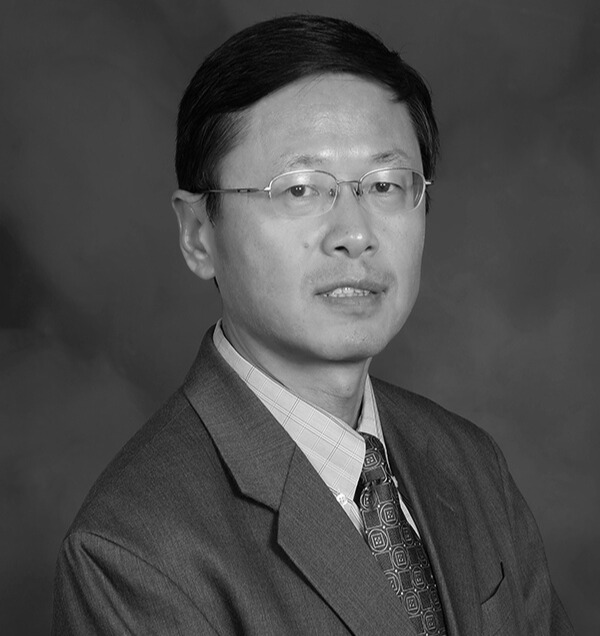
Professor Xinzhong Chen
New Frontiers in Tall Building Design against Strong Winds: 3D Coupled Response, Aeroelastic Effect, Inelastic Response and Wind Directionality
This talk presents an analysis framework for three-dimensional coupled wind-induced response of tall buildings, with particular emphasis on estimating extremes of combined structural responses. Various approaches for identifying amplitude-dependent aerodynamic damping associated with crosswind response near vortex lock-in wind speed are introduced, based on wind tunnel test data. An equivalent nonlinear equation approach is then presented, together with closed-form formulations for estimating stochastic crosswind responses of tall buildings with nonlinear aerodynamic damping. The talk further addresses inelastic wind-induced responses of tall buildings, aiming to meet the challenges of performance-based design beyond current linear elastic framework. A reduced-order model for inelastic response analysis, developed using modal pushover analysis, is introduced, and the fundamental characteristics of inelastic alongwind and crosswind responses are comprehensively discussed. Finally, closed-form formulations are presented for estimation of probabilistic extreme wind-induced responses and failure probabilities by combining extreme response statistics and directional wind speed probability distributions.
President’s Excellence in Research Professor
Department of Civil, Environmental & Construction Engineering
Texas Tech University, Lubbock, Texas, USA
Dr. Xinzhong Chen is a distinguished scholar and internationally recognized expert in the field of wind engineering. He earned his Doctor of Engineering degree in Civil Engineering from Kyoto University in Japan in 1995. Prior to that, he obtained a Master of Science in Civil Engineering from the China Academy of Railway Sciences in 1986, and a Bachelor of Science in Civil Engineering from Southwest Jiaotong University in China in 1983.
His extensive research focuses on the aerodynamics of bridges and buildings, wind engineering, structural dynamics, fatigue and extreme load effects on large wind turbines, and aeroelastic stability of wind turbines. Dr. Chen has developed advanced computational models and experimental techniques that have significantly improved the understanding of wind effects on civil infrastructure. His work contributes to safer and more efficient design standards in engineering practice worldwide.
He has published numerous influential papers and serves as a mentor to graduate students and researchers in the field. Dr. Chen’s contributions have helped bridge the gap between theoretical research and practical applications in wind engineering, impacting both academia and industry.
Awards and Honors:
• Davenport Medal (2024)
Awarded by the International Association for Wind Engineering (IAWE) for his outstanding contributions to the aerodynamics of bridges and buildings using advanced analysis, modeling, and simulation techniques. He is among the few U.S. scholars to receive this prestigious medal.
• Robert H. Scanlan Medal (2024)
Presented by the American Society of Civil Engineers (ASCE), this award recognizes his distinguished achievements in engineering mechanics, especially in wind engineering and aerodynamics.
• Jack E. Cermak Medal (2017)
Given by ASCE to honor his exceptional contributions to wind engineering and industrial aerodynamics.
• Whitacre Research Award for Excellence (2011)
Awarded by the Whitacre College of Engineering at Texas Tech University for outstanding research accomplishments.
